
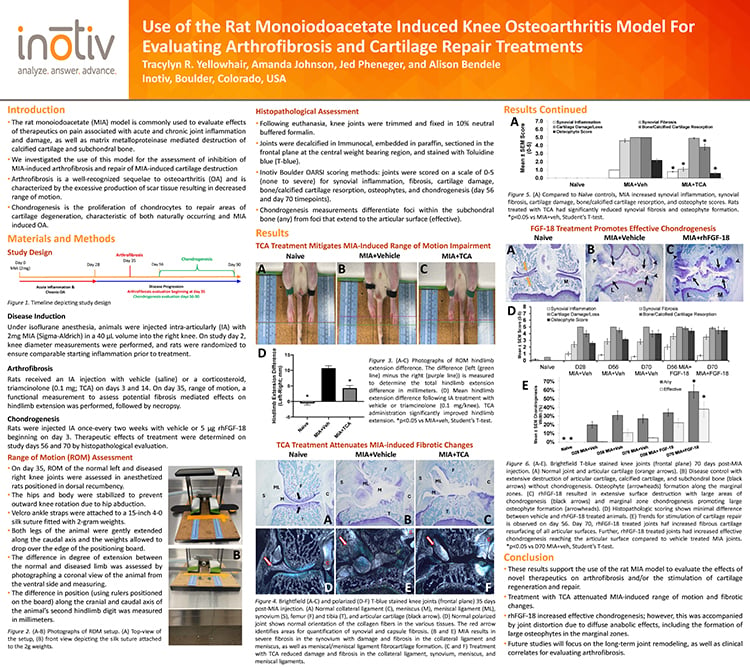
Evaluate arthrofibrosis and cartilage repair in the rat MIA osteoarthritis model.
Osteoarthritis is a progressive disease characterized by joint inflammation, cartilage degeneration, and fibrosis. Arthrofibrosis—defined by excessive scar tissue formation and reduced joint mobility—is an important yet often underrepresented feature of osteoarthritis progression.
The rat monoiodoacetate (MIA) osteoarthritis model is a widely used preclinical model that replicates key features of osteoarthritis, including cartilage damage, inflammation, and subchondral bone changes. This MIA-induced osteoarthritis model also enables evaluation of both structural damage and functional impairment, supporting translational osteoarthritis research.
This study demonstrates how the rat MIA osteoarthritis model can be used to assess arthrofibrosis and cartilage repair using histopathology and range of motion endpoints.
What You’ll Learn from This Scientific Poster:
-
How the rat MIA osteoarthritis model enables evaluation of inflammation, cartilage damage, and fibrosis in a single study
-
How to assess joint function and cartilage repair using integrated functional and histopathological endpoints
-
How to evaluate both fibrosis and chondrogenesis within one preclinical osteoarthritis model
-
How this model supports evaluation of anti-fibrotic and regenerative therapies
Download the Scientific Poster to explore how this rat MIA osteoarthritis model supports translational osteoarthritis research.