

Modeling Progressive Liver Disease in CDHFD Rats
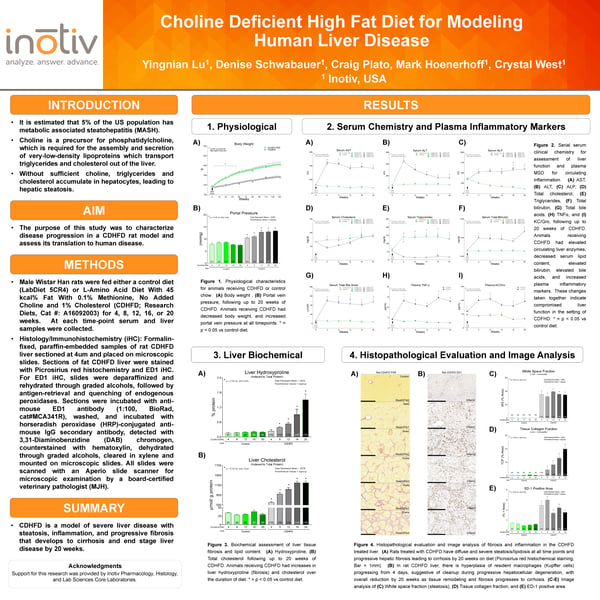
Metabolic dysfunction-associated steatohepatitis (MASH) remains a major driver of progressive liver disease, with steatosis, inflammation, fibrosis, and cirrhosis contributing to significant clinical burden. As disease advances, researchers need preclinical models that closely reflect the complexity of human liver pathology and support translational therapeutic development.
The Choline Deficient High Fat Diet (CDHFD)-Induced MASH Rat Model offers a valuable platform for studying progressive liver disease and evaluating translational endpoints relevant to MASH research. Because choline is required for the transport of triglycerides and cholesterol out of the liver, insufficient choline leads to their accumulation within hepatocytes, contributing to hepatic steatosis and downstream liver dysfunction.
In this study, male Wistar Han rats were evaluated across multiple timepoints up to 20 weeks on CDHFD to characterize disease progression and assess translational relevance to human liver disease. Histopathology, serum chemistry, inflammatory markers, and liver biochemical endpoints were used to define the progression of disease severity.
By downloading this poster, you will explore:
-
Evaluation of steatosis, inflammation, and fibrosis across multiple stages of liver disease progression
-
Assessment of key liver function markers
-
Measurement of portal vein pressure and liver hydroxyproline as indicators of fibrosis progression
-
Translational relevance of the CDHFD-Induced MASH Rat Model to human liver disease
Download the Scientific Poster to access the full study design, longitudinal biomarker analysis, and translational findings that can help advance your liver disease research.